
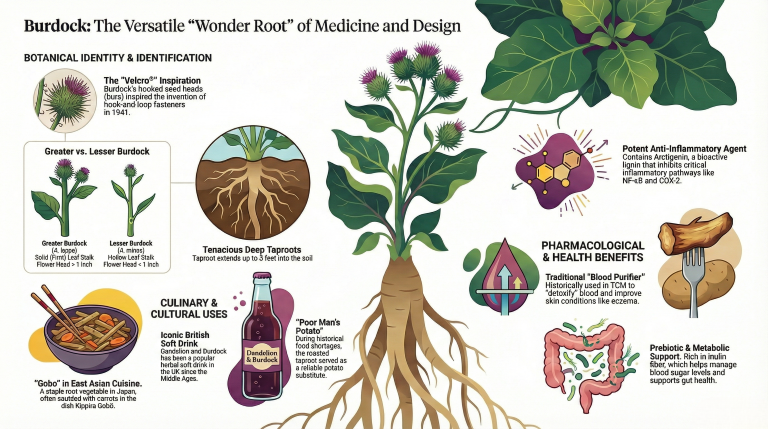
Burdock is a genus of biennial flowering plants, scientifically known as Arctium, belonging to the Asteraceae (daisy) family. Native to the temperate regions of Europe and Asia, these plants are widely recognized for their deep taproots and prickly seed heads (burs) that cling to fur and clothing.
INCI Classification
While the sources do not explicitly list a specific “INCI” (International Nomenclature Cosmetic Ingredient) directory entry, they identify the botanical name used for classification as Arctium lappa L. for the greater burdock and Arctium minus for the lesser/common burdock. Extracts from these plants are typically labelled in cosmetic and medicinal contexts by these scientific names.
Plant Parts Used
Nearly every part of the burdock plant has traditional or clinical applications:
- Roots:The deep taproot, harvested in its first year, is the most commonly used part for both food and medicine.
- Seeds:Used primarily in Traditional Chinese Medicine (TCM) for their anti-inflammatory and anti-tumour properties.
- Leaves:Young leaves are sometimes eaten as greens, while older leaves are used topically in folk medicine.
- Stems/Stalks:Immature flower stalks are harvested in late spring, peeled, and eaten raw or boiled.
Health Benefits
Burdock contains several bioactive metabolites, including antioxidants, anti-inflammatory compounds, and prebiotic fibres.
- “Blood Purification”:Historically used to “detoxify” blood, promote circulation to the skin surface, and treat skin conditions like eczema and acne.
- Anti-Inflammatory:Contains arctigenin and arctiin, which inhibit pro-inflammatory cytokines and enzymes like COX-2.
- Anti-Diabetic:Studies suggest burdock root may help manage glucose levels and improve insulin sensitivity.
- Cancer Support:Research indicates components like arctigenin may inhibit the growth of certain tumours, including pancreatic, breast, and liver cancers.
- Antioxidant Power:Fights free radicals that contribute to aging and chronic inflammatory disorders.
Uses
- Culinary Uses
- Root Vegetable:Known as gobo in Japan, the root is stir-fried (e.g., kinpira gobō), simmered in soups, or used as a potato substitute.
- Beverages:In the UK, it is a key ingredient in the traditional soft drink Dandelion and Burdock.
- Prebiotic Food:High in inulin, a fibre that supports gut health.
- Traditional and Industrial Uses
- Scalp Treatment:“Bur oil” is used in Europe to treat the scalp and hair.
- Inspiration for Velcro:The hooked bracts of the burrs led Swiss engineer George de Mestral to invent the hook-and-loop fastener.
- Phytoremediation:The plant shows tolerance to heavy metals (like Pb, Cu, and Zn), making it a candidate for environmental cleanup programs.
Potential Side Effects and Safety
Although generally safe, burdock can cause adverse reactions in some individuals:
- Allergic Reactions: Can cause contact dermatitis (skin rash) or, in severe cases, life-threatening anaphylaxis.
- Pregnancy Warning: Recommended to be avoided during pregnancy as animal studies show it may cause uterine stimulation.
- Drug Interactions: Due to its diuretic effects, it may impact those with chronic health conditions; a healthcare professional should be consulted before use.
- Liver Injury: Rare cases of acute liver injury have been reported.