
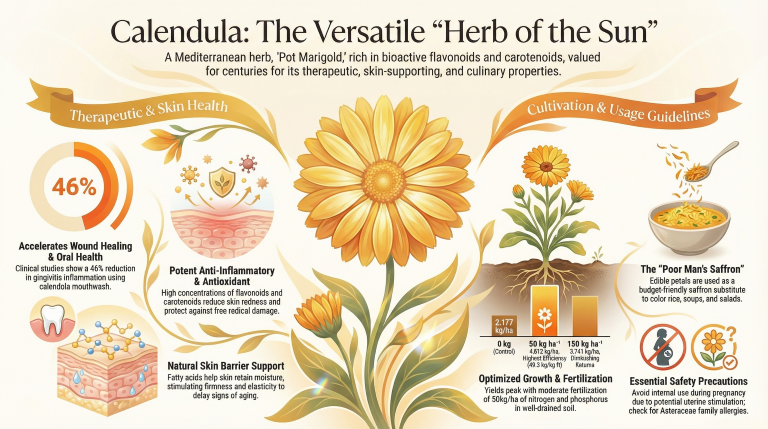
Calendula (Calendula officinalis L.), frequently referred to as pot marigold, is a versatile aromatic herb in the Asteraceae (daisy) family used for centuries in traditional medicine, skincare, and cooking. It is distinct from the Tagetes genus (true marigolds), which is primarily used for pest control and can be phototoxic to the skin.
Classification and Identification
- INCI Classification:In the cosmetic industry, the plant is typically identified as Calendula Officinalis Flower Extract or Calendula Officinalis Seed Oil.
- Scientific Profile:
◦ Kingdom: Plantae.
◦ Order: Asterales.
◦ Family: Asteraceae (Compositae).
◦ Genus: Calendula.
◦ Species: C. officinalis.
- Physical Traits:It is a short-lived perennial often grown as an annual, reaching heights of 30 to 80 cm (12 to 31 inches). It features bright yellow to deep orange daisy-like flower heads (capitula) and light green, lance-shaped leaves covered in fine, sticky hairs.
Parts of the Plant Used
While the flowers and petals (florets) are the most coveted for their high resin and antioxidant content, nearly all parts of the plant are utilized.
- Flowers/Petals:Used for teas, tinctures, salves, oils, and culinary garnishes.
- Leaves:Edible but often bitter; used in salads or traditional external infusions for conditions like varicose veins.
- Stems:Occasionally crushed to treat warts or used in whole-plant extracts.
- Roots:Primarily used in scientific research to study unique terpenoid compounds.
Key Benefits
The biological efficacy of Calendula comes from its rich matrix of flavonoids, carotenoids, and triterpenoids.
- Wound Healing:Accelerates tissue regeneration by stimulating collagen production and angiogenesis (new blood vessel growth).
- Anti-Inflammatory:Effectively reduces redness, swelling, and pain by inhibiting pro-inflammatory cytokines.
- Antimicrobial:Acts against various bacteria and fungi, including Staphylococcus aureus and Candida albicans.
- Antioxidant:Scavenges free radicals to protect cells from oxidative stress and environmental damage.
Primary Uses
| Category | Common Applications |
| Skincare | Treatment for eczema, rosacea, acne, radiation-induced dermatitis, and diaper rash. |
| Medicinal | Tea for digestive issues (gastritis, ulcers) and mouthwashes for oral health (gingivitis). |
| Culinary | Known as “poor man’s saffron“; petals add colour to soups, rice, salads, and even cheese. |
| Industrial | Used as a natural dye for fabrics and added to poultry feed to deepen the yellow of egg yolks. |
Potential Side Effects and Safety
- Allergic Reactions:Individuals sensitive to the Asteraceae family (e.g., ragweed, daisies, chamomile) may experience rashes or, rarely, anaphylaxis.
- Pregnancy:Internal use is contraindicated during pregnancy because it may act as an emmenagogue, potentially stimulating uterine activity.
- Drug Interactions:Due to mild sedative properties, it may enhance the effects of CNS depressants or interact with blood pressure and diabetes medications.