
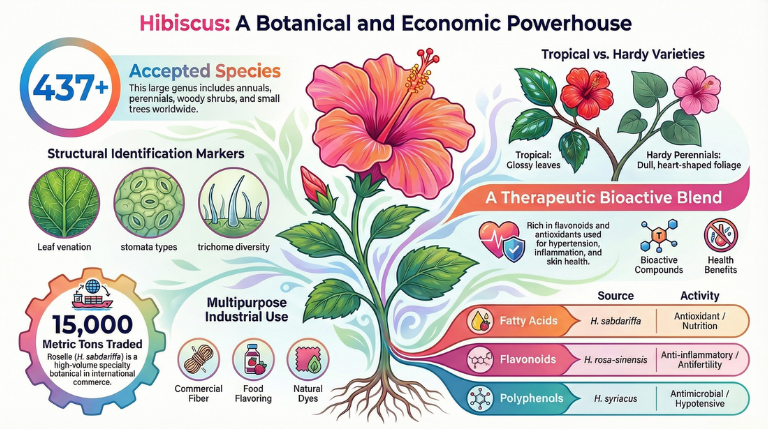
Hibiscus is a large genus of several hundred species in the Malvaceae (mallow) family, native to warm temperate, subtropical, and tropical regions. It is widely recognized for its large, showy, trumpet-shaped flowers and is used globally for ornamental, industrial, and medicinal purposes.
Botanical Classification
- Botanical Name:Hibiscus L. (Genus).
- Common Species:Hibiscus sabdariffa (Roselle), Hibiscus rosa-sinensis (Chinese Hibiscus), and Hibiscus syriacus (Rose of Sharon).
- Family:Malvaceae.
What is Hibiscus?
Hibiscus plants range from annual and perennial herbs to woody shrubs and small trees. They are characterized by:
- Leaves:Alternate, often with toothed or lobed margins.
- Flowers:Trumpet-shaped with five or more petals, featuring a prominent protruding stigma and anthers. Colours include red, pink, yellow, orange, and purple.
- Fruit:A dry five-lobed capsule that splits open at maturity to release seeds.
Parts of the Plant Used
The extraction of economical phytochemicals (such as flavonoids, tannins, and steroids) can be done from almost every part of the plant:
- Calyces (Swollen Flower Bases):The most commercially significant part of H. sabdariffa, used for teas, beverages, and jellies.
- Leaves:Used for food (salads or cooked greens), animal fodder, and medicine.
- Flowers:Used in food, hair treatments, and traditional medicine.
- Seeds:Processed for oil (lubricants, soaps) or roasted as a coffee substitute.
- Roots:Used in traditional remedies for conditions like gonorrhoea and skin diseases.
- Stem/Inner Bark:Harvested for commercial fibre (rope, paper, and construction).
Benefits and Biological Activities
Hibiscus is valued in modern pharmacology for its unique blend of bioactive phytochemicals.
- Antioxidant Properties:High vitamin C and polyphenol content help combat oxidative stress.
- Heart Health:Clinical research indicates that drinking hibiscus tea can decrease blood pressure and lower cholesterol levels.
- Skin and Hair Care:Leaves have anti-inflammatory properties that help with acne, while flower and leaf extracts aid in healing ulcers and promoting hair growth from dormant follicles.
- Metabolic Support:Extracts demonstrate anti-obesity, anti-diabetic, and hepatoprotective (liver-protecting) activities.
Common Uses
Category | Usage Details |
Culinary | Hot/cold herbal teas, cranberry-like sauces, jams, wine, and raw salads. |
Medicinal | Treatment for fever, hypertension, liver disease, and inflammation. |
Industrial | Fiber for cordage, sacking, and high-quality paper making (Kenaf). |
Ornamental | Landscape shrubs for gardens and balcony containers due to year-round blooming. |
Potential Side Effects and Precautions
- Pregnancy and Fertility:Animal studies show anti-fertility effects and stimulation of uterine contractions; therefore, it is generally not recommended during pregnancy.
- Drug Interactions:Hibiscus may reduce the bioavailability of chloroquine (malaria medication) and interfere with the excretion of diclofenac (an anti-inflammatory drug).
- Testicular Health:One report suggested that excessive long-term doses might have a deleterious effect on rat testes.
- Blood Pressure:Because it lowers blood pressure, it should be used with caution by those already taking hypotensive drugs.