
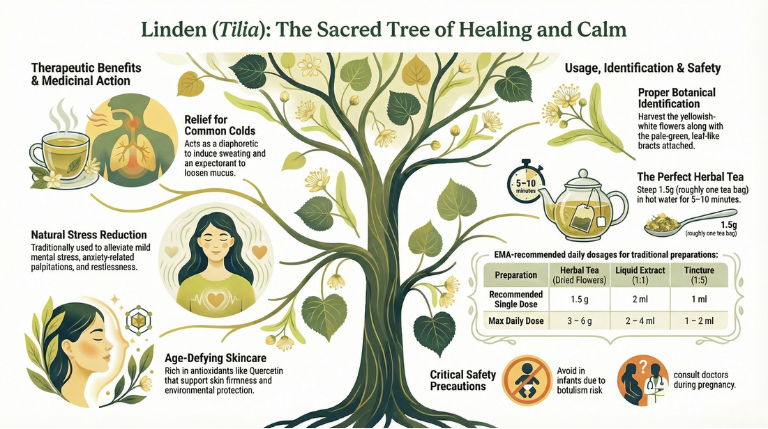
Lime blossom, commonly known as linden flower, refers to the dried flowers of the linden tree (Tilia genus), specifically the species Tilia cordata Miller, Tilia platyphyllos Scop., or their hybrid Tilia x vulgaris Heyne. Historically used for centuries in traditional medicine, it is renowned for its honey-like fragrance and its ability to act as a gentle sedative and diaphoretic.
INCI and Botanical Classification
In the International Nomenclature of Cosmetic Ingredients (INCI), these botanical extracts are typically derived from:
- Tilia Cordata(Small-leaved lime).
- Tilia Platyphyllos(Large-leaved lime).
- Tilia Vulgaris(Common lime/linden), often used for “linden blossom absolute” in cosmetic anti-aging formulations.
Parts of the Plant Used
Different parts of the linden tree serve various medicinal and culinary purposes:
- Flowers and Bracts:The creamy-white flowers are harvested along with the pale green leaf-like bracts attached to the stalk; these are the primary components for teas, tinctures, and perfumes.
- Leaves:Young leaves are edible and can be used in salads or smoothies. Infusions can also be used externally as a poultice for skin conditions.
- Bark:Used in some tea blends and to extract fibres for traditional crafts.
- Fruit:Edible and a source of fatty acids, the fruit can be enjoyed raw when soft or as a garnish when ripe.
- Sap:Occasionally used as a source of sugar.
Health Benefits and Actions
The benefits of lime blossom are attributed to its rich content of flavonoids (like quercetin and kaempferol), mucilage, and volatile oils.
Benefit Category | Description |
Nervine/Sedative | Alleviates anxiety, restlessness, and mental stress. It is often used as a sleep aid and to calm “nervous palpitations”. |
Diaphoretic | Promotes perspiration, making it a staple for treating feverish colds and helping the body regulate temperature. |
Antispasmodic | Eases muscle tightening, spasms, and cramps related to migraines or menstrual pain. |
Hypotensive | Acts as a vasodilator to help lower high blood pressure, especially when linked to nervous tension. |
Anti-inflammatory | Helps reduce pain and swelling, particularly in the cardiovascular system. |
Common Uses
- Medicinal Teas:The most popular use is a tisane (herbal tea) prepared by steeping 1.5g to 2g of dried flowers in hot water to relieve symptoms of the common cold.
- Skincare & Cosmetics:Linden blossom absolute is used in high-performance anti-aging products to encourage cell renewal, improve skin firmness, and shield against environmental stressors.
- Culinary:It is a natural source of food flavouring and produces linden honey, which is highly valued for its flavour.
- Baths:Historically added to bathwater to quell “hysteria” and promote relaxation.
Potential Side Effects and Precautions
- Allergic Reactions:Sensitivity to linden pollen can cause contact dermatitis, itchy eyes, or respiratory irritation.
- Cardiac Health:Frequent or excessive consumption has been tentatively linked to heart damage; individuals with existing cardiac disorders should consult a doctor.
- Infant Safety:Linden may carry Clostridium botulinum spores, posing a risk of infant botulism; it should not be given to infants.
- Interactions:It may act as a diuretic, potentially increasing lithium levels in the body and causing dehydration.
- Drowsiness:Due to its sedative nature, users should avoid driving or operating heavy machinery immediately after consumption.