
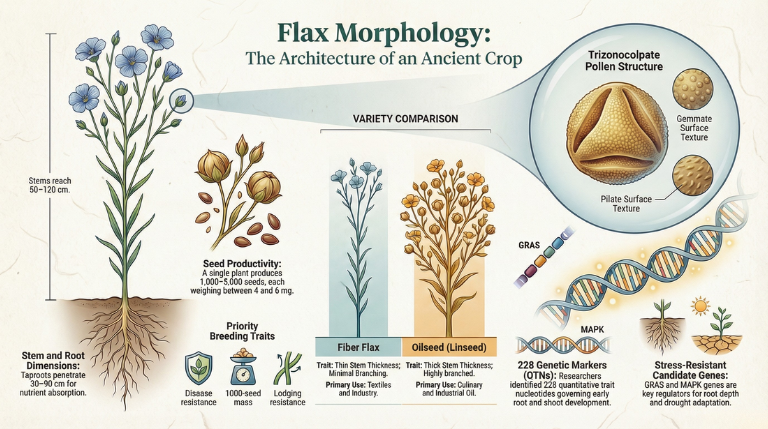
Flax (Linum usitatissimum L.) is an annual herbaceous plant and one of the oldest and most versatile crops in human history, with cultivation dating back over 6,000 to 8,000 years. It is unique because it is traditionally cultivated for two distinct primary purposes: its oil-rich seeds (linseed) and its strong stem fibres (flax).
INCI and Botanical Classification
- Botanical Name:Linum usitatissimum L..
- Family:Linaceae.
- Genus:Linum.
- INCI Classification:The plant’s products are technically listed in cosmetic and personal care contexts based on its botanical name, such as Linum Usitatissimum (Linseed) Seed Oil or Linum Usitatissimum (Linseed) Seed Extract.
What is Flaxseed?
Flax is an erect plant that typically grows between 50 cm and 120 cm in height. It features a shallow taproot system and produces five-petaled flowers that are most commonly blue, though white, pink, and red varieties exist.
There are two specialized types of L. usitatissimum:
- Oilseed (Linseed) Varieties:These are shorter, possess more secondary branches, and produce more “seed bolls” (capsules).
- Fiber Varieties:These are taller with straight stems and fewer branches to ensure long, continuous fibres for textile production.
Parts of the Plant Used
- Seeds:Used for human consumption (whole, milled, or as sprouts) and for oil extraction.
- Stems:Contain bast fibres in the bark, which are used for high-quality textiles and industrial materials.
- Hulls:The outer layer of the seed, often used in animal feed or as a source of phytochemicals.
- Straw:The remaining stalks after seed harvest, which can be processed into high-quality paper, including banknotes and cigarette paper.
Benefits and Nutritional Profile
Flaxseed is considered a “functional food” because it provides health-promoting properties beyond basic nutrition.
- Omega-3 Fatty Acids:It is the richest plant source of alpha-linolenic acid (ALA), an essential fatty acid that helps improve the Omega-6 to Omega-3 ratio in Western diets.
- Lignans:Flaxseed contains up to 800 times more lignans than other plant seeds; these are converted into phytoestrogens that may block hormone-sensitive cancers.
- Dietary Fiber:It provides both soluble and insoluble fibre, which aids in digestion and helps regulate bowel movements.
- Disease Prevention:Intake is linked to a reduced risk of cardiovascular disease, stroke, and certain cancers (breast, prostate, and colon).
Common Uses
The versatility of flax is illustrated in its diverse applications:
- Food Products:Used in bakery items (muffins, bread), margarine, energy bars, and as a component in poultry meal to produce Omega-3 enriched eggs.
- Textiles:Processed into linen for clothing, bedding, handkerchiefs, and towels.
- Industrial:Linseed oil is a “drying oil” used in paints, varnishes, printer’s ink, and as the primary raw material for linoleum flooring.
- Animal Feed:Provides a protein-rich residue (linseed meal) for livestock like cattle, buffalo, and horses, contributing to healthy skin and glossy coats.
Potential Side Effects
- Contact Irritation:Linseed oil may cause skin irritation upon contact for some individuals.
- Ingestion Risks:While common flax is safe for food, ingestion of certain wild or decorative flax species can cause difficulty breathing, paralysis, and convulsions.
- Industrial Hazards:Rags soaked in linseed oil (and other cooking oils) are susceptible to spontaneous combustion if not handled properly.
- Digestive Issues:Due to its high fibre content, it is traditionally used as a laxative; however, excessive consumption without proper hydration may cause discomfort.