
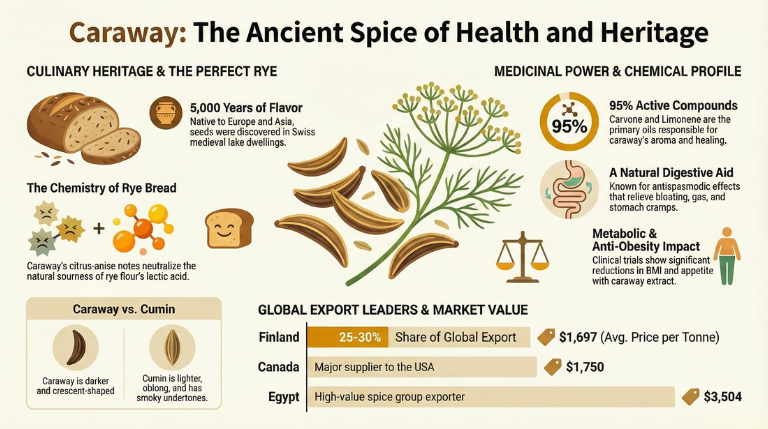
Caraway, scientifically known as Carum carvi, is a biennial herb belonging to the Apiaceae (parsley) family. While often referred to as a “seed,” the part used as a spice is actually the dried fruit of the plant, which is small, brown, and crescent-shaped with five distinct ridges.
What is Caraway?
Caraway is a hardy plant native to Europe, Western Asia, and North Africa. It has been used for over 5,000 years, with archaeological evidence of its use dating back to 3,500 BCE.
- Physical Features:The plant grows approximately 20 to 70 centimetres tall and features slender branched stems with feathery, tripinnate leaves.
- Flowers:It produces creamy white to pale pink flowers arranged in compound umbels.
- Flavour Profile:It carries a distinctive aroma reminiscent of anise and liquorice, with a flavour that is slightly sharp, sweet, and earthy.
Parts of the Plant Used
Most of the caraway plant is edible and serves various purposes:
- Fruit (“Seeds”):The most commonly used part, employed as a savoury spice in baking, cooking, and medicine.
- Roots:The taproot is fusiform (carrot-like) and can be eaten as a vegetable, similar to parsnips or carrots.
- Leaves:Young leaves are edible and can be used in salads or cooked as greens.
- Essential Oil:Extracted from the fruit via hydro-distillation, the oil contains potent compounds like carvone and limonene used in pharmaceuticals and fragrances.
Key Benefits
Caraway is highly valued for its high nutritional density and therapeutic properties:
- Digestive Aid:It is traditionally used to treat bloating, indigestion, gas, and stomach cramps due to its carminative and antispasmodic effects.
- Weight Management:Clinical trials have shown that caraway water or extracts can significantly reduce body weight, BMI, and appetite.
- Antimicrobial and Antioxidant:The essential oils act as powerful antioxidants and have shown antibacterial activity against pathogens like S. aureus and E. coli.
- Nutritional Value:It is an excellent source of dietary fibre, and minerals such as iron, copper, calcium, and potassium.
Primary Uses
Category | Common Applications |
Culinary | Used in rye bread, sauerkraut, sausages (like German Sauerbraten), cheeses, and stews. |
Medicinal | Found in formulations for IBS (Irritable Bowel Syndrome), functional dyspepsia, and as a stimulant to increase breast milk flow. |
Industrial | Used to flavour liqueurs (such as Kummel), scent soaps, and flavour medications. |
Traditional | Used historically as a breath freshener. |
Potential Side Effects and Precautions
While generally safe in food amounts, medicinal use requires caution:
- Gastrointestinal Issues:When combined with peppermint oil, caraway may cause heartburn, belching, and nausea.
- Diabetes:Caraway may lower blood sugar levels, requiring close monitoring for diabetic patients to avoid hypoglycaemia.
- Pregnancy:It is considered possibly unsafe in medicinal amounts as it may start menstruation and potentially lead to miscarriage.
- Iron Overload:It may increase iron absorption, which could be problematic for individuals with hemochromatosis.
- Surgery:Due to its effects on blood sugar, it should be discontinued at least two weeks before scheduled surgery.
- Drug Interactions:It may interact with Lithium, sedatives (causing excessive drowsiness), and certain medications changed by the liver.