
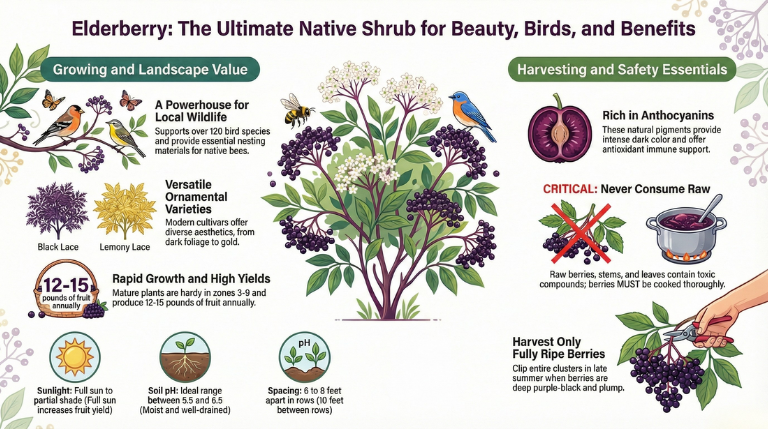
The elderberry shrub, belonging to the genus Sambucus, is a fast-growing deciduous plant recognized for its clusters of fragrant white flowers and deep purple-to-black berries. Historically revered as a “nature’s pharmacy,” it is widely used today in both traditional medicine and modern functional foods.
Classification and Botanical Description
The elderberry is part of the Adoxaceae family (previously categorized under Caprifoliaceae or Sambucaceae). While there are many species, the three most common for human use include:
- European Black Elder (Sambucus nigra):Often grows as a small tree reaching up to 20 feet.
- American Black Elderberry (Sambucus nigra ssp. canadensis):More shrub-like, typically reaching 10 to 12 feet.
- Blue Elderberry (Sambucus nigra ssp. cerulea):Native to Western North America, it features blue-hued berries with a waxy bloom.
INCI Classification: In cosmetic and personal care ingredients, it is typically listed as Sambucus Nigra Fruit Extract or Sambucus Nigra Flower Extract.
Parts of the Plant Used
While historical traditions utilized the whole plant, modern safety standards restrict internal use to specific parts:
- Berries:Used for syrups, jams, wines, and juice; they must be fully ripe and cooked to be safe.
- Flowers:Known as “elderblow,” these are used for teas, cordials, and fritters, or added to skincare for their soothing properties.
- Leaves and Bark:Historically used in topical poultices for bruises or sprains, but contain high levels of toxins and are not for internal consumption.
- Wood/Stems:The soft, pithy centres are easily hollowed out, historically used to craft flutes, whistles, and blowguns.
Benefits and Uses
- Health and Nutrition
- Immune Support:Elderberries are rich in anthocyanins (antioxidants) that stimulate the immune system and may reduce the severity and duration of cold and flu symptoms.
- Nutrient Dense:They are high in Vitamin C, fibre, potassium, and iron.
- Antiviral Properties:Research suggests elderberry flavonoids may block viruses from entering host cells.
- Culinary and Beverage
- Drinking Shrubs:An old-fashioned “sipping vinegar” made from fruit, sugar, and vinegar, used as a health tonic or cocktail mixer.
- Traditional Foods:Jellies, pies, wines, and syrups are common across European and Native American cultures.
- Ecological and Ornamental
- Wildlife Magnet:The shrub provides food and nesting for over 120 bird species.
- Pollinator Support:Large flower clusters (cymes) attract bees, butterflies, and hoverflies.
Potential Side Effects and Safety
Warning: Elderberries should never be eaten raw.
- Toxicity:Leaves, stems, bark, roots, and raw/unripe seeds contain cyanogenic glycosides (sambunigrin), which can release hydrogen cyanide in the body.
- Poisoning Symptoms:Ingestion of raw parts may cause severe nausea, vomiting, abdominal cramps, and diarrhoea. Cooking or drying the fruit effectively neutralizes these toxins.
- Drug Interactions:Because elderberry stimulates the immune system, it may interfere with immunosuppressant medications used for autoimmune diseases or organ transplants.
- Contraindications:It is generally advised to avoid elderberry supplements during pregnancy or breastfeeding due to a lack of clinical safety data.