
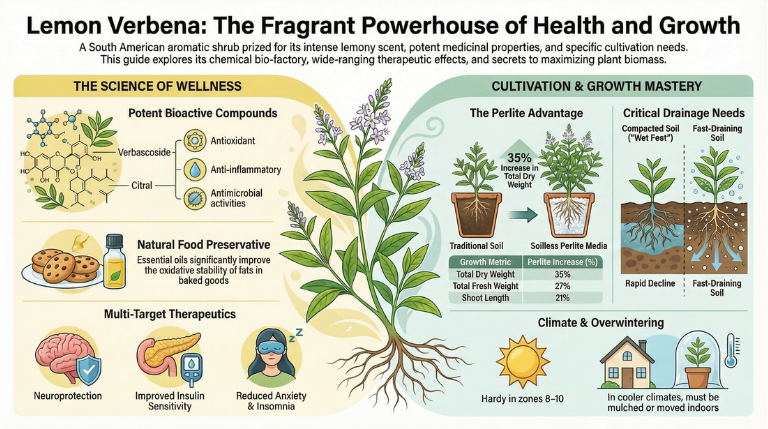
Lemon verbena (Aloysia citrodora) is a perennial flowering shrub or subshrub belonging to the Verbenaceae family. Native to South America, particularly regions in Argentina, Chile, Paraguay, and Uruguay, it is widely cultivated for its intense, sweet lemon fragrance and medicinal properties.
INCI Classification
In the context of cosmetic regulations and international nomenclature, lemon verbena is often classified under the name of its synonyms. The European Union’s cosmetic regulations (Regulation No. 1223/2009) specifically identify the essential oils and derivatives of the plant under the botanical synonym:
- Lippia citriodora Kunth..
Plant Parts Used
The most valuable part of the lemon verbena plant is its leaves.
- Fresh or Dried Leaves:Used for infusions, seasonings, and extraction of bioactive compounds.
- Essential Oil:Distilled from the leaves for use in flavourings and (with restrictions) perfumery.
- Flowers:Small white or purple flowers appear in sprays, though they are less commonly used than the foliage.
Benefits and Pharmacological Properties
Lemon verbena contains a diverse array of phytochemicals, including verbascoside, citral (geranial and neral), and various flavonoids like luteolin and quercetin. These constituents contribute to several health benefits:
- Antioxidant and Anti-inflammatory:It demonstrates significant ROS (reactive oxygen species) scavenging activity and can modulate inflammatory responses, making it a candidate for managing chronic conditions.
- Sedative and Anxiolytic:Traditionally used to treat insomnia and anxiety, research suggests it may enhance sleep quality by modulating GABA-A receptors.
- Metabolic Health:Polyphenols in the plant may improve insulin sensitivity, regulate lipid metabolism, and reduce adiposity, offering potential benefits for obesity and type 2 diabetes management.
- Digestive Aid:It is valued for its antispasmodic, carminative, and sedative properties, helping to soothe indigestion, flatulence, and stomach cramps.
- Antimicrobial:The essential oil and extracts show activity against various pathogens, including MRSA, E. coli, and Candida albicans.
Common Uses
Category | Primary Applications |
Culinary | Used to flavour fish, poultry, vegetable marinades, salad dressings, jams, and Greek yogurt. It is also the flavouring for the Peruvian soft drink Inca Kola. |
Beverages | Popular as a herbal tea (infusion) and used to flavour liqueurs. |
Medicinal | Utilized in traditional Latin American medicine for bronchial ailments, cardiac complaints, and nervous system disturbances. |
Household | Leaves are frequently used in potpourri, and the plant is valued in cut flower arrangements for its scent. |
Pest Control | Essential oils of A. citrodora are effective as a botanical control against stink bugs, killing eggs and nymphs. |
Potential Side Effects and Dangers
While generally recognized as safe (GRAS) by the FDA for use as a flavouring, lemon verbena has several notable risks:
- Skin Sensitization:The essential oil has phototoxic properties and can cause skin sensitization. For this reason, its use as a fragrance ingredient is prohibited in the European Union (except for the absolute form).
- Irritation:Direct contact with the plant can cause horrible itching in sensitive individuals; washing with mild soap is recommended immediately after contact.
- Drug Interactions:Due to phytochemicals that may affect drug-metabolizing enzymes, it may cause herb-drug interactions.
- Excessive Sedation:Because of its potent relaxing effects, consuming large amounts may make it dangerous to drive or operate heavy machinery.
Relevant Images
- Foliage and Form:A perennial shrub reaching 2–3 meters, featuring glossy, pointed, lanceolate leaves.
- Microscopic View:The leaves exhibit glandular trichomes (hairs) and anomocytic stomata, as well as specialized cells containing the essential oils.
- Flowers:Tiny purple or white flowers arranged in airy spikes or terminal panicles.