
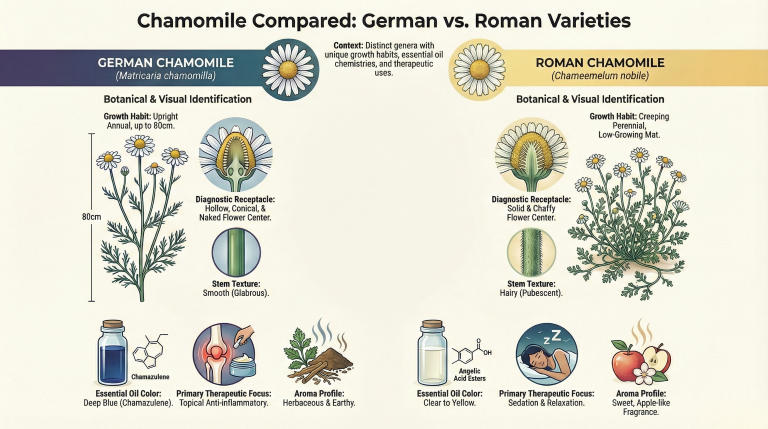
Chamomile refers to several daisy-like plants in the Asteraceae (sunflower) family, valued for centuries for their medicinal, aromatic, and cosmetic properties. The two most significant commercial and therapeutic species are German Chamomile (Matricaria chamomilla) and Roman Chamomile (Chamaemelum nobile).
Botanical and INCI Classification
In the cosmetic and pharmaceutical industries, chamomile is classified primarily by its botanical nomenclature, which forms the basis for INCI (International Nomenclature Cosmetic Ingredient) labelling.
- German Chamomile:
◦ Scientific Name: Matricaria chamomilla L..
◦ Synonyms (often used in INCI): Matricaria recutita L. or Chamomilla recutita.
- Roman Chamomile:
◦ Scientific Name: Chamaemelum nobile (L.)
◦ Synonym: Anthemis nobilis L..
What Chamomile Is
Chamomile is an aromatic herb recognized for its distinctive apple-like scent, from which its name (Greek chamaimēlon or “earth-apple”) is derived.
- German Chamomileis an upright annual reaching up to 60–80 cm, featuring a hollow, conical flower base.
- Roman Chamomileis a low-growing perennial (15–30 cm) that spreads via creeping stems to form a thick groundcover; its flower base is solid.
Parts of the Plant Used
The most valuable elements of the plant are the flower heads (capitula), which are harvested for their high concentration of essential oils and bioactive compounds.
- Dried Flowers:Used for teas, infusions, and powders.
- Essential Oil:Extracted via steam distillation from the flowers; German chamomile produces a striking deep blue oil due to its chamazulene content.
- Whole Herb/Leaves/Stems:Occasionally used in specific extracts, tinctures, or as a bitter flavouring in beer brewing.
Benefits and Pharmacological Properties
Chamomile is often called a “star herb” or “heal-all” because it contains over 120 identified chemical constituents, including terpenoids (like -bisabolol) and flavonoids (like apigenin).
- Anti-inflammatory:It inhibits inflammatory mediators and is used for skin irritations, eczema, and internal inflammation.
- Antioxidant:Scavenges free radicals, supporting anti-aging and overall cellular health.
- Sedative and Anxiolytic:Promotes relaxation and sleep; the flavonoid apigenin binds to brain receptors to reduce anxiety.
- Antispasmodic:Relaxes smooth muscles to alleviate digestive cramps, bloating, and menstrual pain.
- Antimicrobial:Exhibits antibacterial and antifungal activity against various pathogens.
Uses
Chamomile is versatile across several industries:
- Medicinal:Treating sleep disorders, anxiety, gastrointestinal conditions (colic, ulcers), and supporting wound healing.
- Cosmetic:Found in soaps, shampoos (often for hair lightening), lotions, and baby care products due to its skin-softening and anti-inflammatory properties.
- Culinary:Most commonly consumed as a caffeine-free tea; also used to flavour desserts, liqueurs, and ales.
- Garden/Agriculture:Used as a fragrant lawn replacement, in rock gardens, or as a companion plant to repel pests and improve the health of nearby vegetables.
Potential Side Effects
While generally recognized as safe (GRAS), chamomile can cause adverse reactions in some individuals.
- Allergies:Cross-reactivity is common in people allergic to other Asteraceae plants (ragweed, daisies, marigolds, or chrysanthemums), potentially leading to contact dermatitis or anaphylaxis.
- Pregnancy:Roman chamomile should be avoided as it may cause uterine contractions leading to miscarriage.
- Drug Interactions:It may interact with anticoagulants (blood thinners like warfarin) by increasing the risk of bleeding.
- Hormone Sensitivity:It is not recommended for individuals with hormone-sensitive conditions like breast or ovarian cancer.