
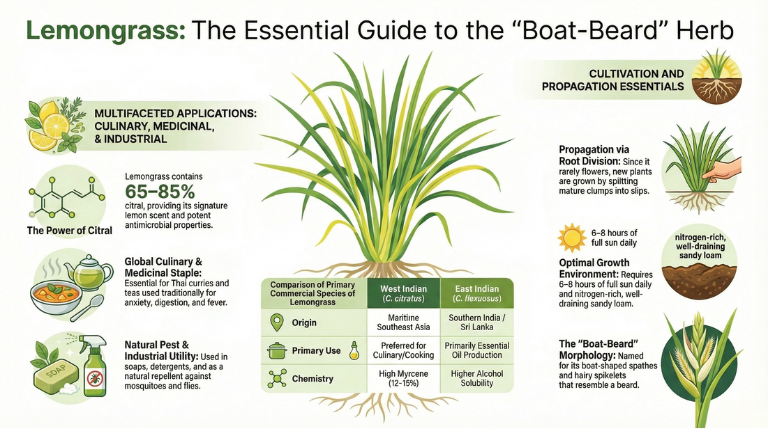
Lemongrass is a tropical, perennial, aromatic grass belonging to the genus Cymbopogon within the botanical family Poaceae. Known for its distinct citrus-like scent, it is native to South Asia and Maritime Southeast Asia but is now cultivated globally in tropical and subtropical regions for culinary, medicinal, and industrial purposes.
Botanical and Regulatory Classification
- Scientific Name:Cymbopogon citratus (West Indian lemongrass) and Cymbopogon flexuosus (East Indian lemongrass).
- INCI / Regulatory Data:While the sources do not explicitly label an “INCI name,” they provide standard regulatory identifiers: CAS Registry No. 89998-14-1 and EINECS No. 289-752-0.
- FDA Status:Lemongrass essential oil is Generally Recognized as Safe (GRAS) for use in food.
Parts of the Plant Used
Lemongrass is highly versatile, with almost every part utilized for different applications:
- Leaves:Used fresh or dried to make teas, infusions, and decoctions. The leaves are also distilled to extract essential oil.
- Stalks/Stems:The swollen, layered base of the stem (often called the “white section”) is commonly used in Asian cooking.
- Roots/Rhizomes:In some cultures, the roots are chewed as toothbrushes, used for pest control, or brewed to treat stomach aches.
- Aerial Parts:Used in folk medicine as a stimulant or diuretic.
Key Benefits
The medicinal value of lemongrass is primarily attributed to its high citral content (65–85%), which provides its lemony aroma and pharmacological properties. Its proven benefits include:
- Antimicrobial & Antifungal:Effective against various bacteria (e.g., S. aureus, E. coli) and fungi (e.g., Candida albicans, Ringworm).
- Anti-inflammatory & Analgesic:Reduces swelling and pain, specifically peripheral pain associated with inflammation.
- Anxiolytic & Sedative:Historically used in Ayurvedic and folk medicine for its calming effect on the nervous system to treat anxiety and stress.
- Digestive Support:Acts as a carminative to relieve gas, cramps, and gastrointestinal disturbances.
- Insecticidal:Acts as a potent repellent against mosquitoes, stable flies, and sand flies.
Primary Uses
Category | Common Applications |
Culinary | Essential in Thai and Asian cuisine (Tom Yum, curries); used in herbal teas, soups, and roasted meats. |
Cosmetics & Personal Care | A popular ingredient in soaps, cleansers, toners, and shampoos to control oil, rejuvenate skin, and fight dandruff. |
Industrial / Home | Used in cleaning detergents, fragrances, laundry, and as a pheromonal lure for beekeepers to attract swarms. |
Potential Side Effects and Safety
- Dermatitis:Lemongrass oil is a skin irritant if used undiluted. It can cause contact dermatitis or allergic reactions, especially in those with sensitive skin.
- Low Hardiness:The plant is not hardy to frost and will die in temperatures prolonged below 10°C.
- Human Trials:While effective in mice for anxiety, some human studies have shown no significant effect on anxiety when consumed as tea.