
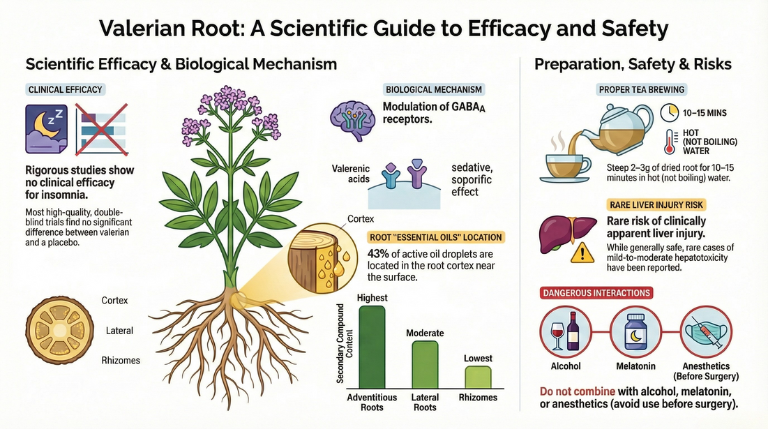
Valerian root (Valeriana officinalis) is a perennial flowering plant native to Europe and Asia, now naturalized in North America, widely recognized for its use as a sedative and sleep aid. It has a long history in folk medicine, dating back to ancient Greece and Rome, where it was prescribed for insomnia.
Classification and Identification
- Botanical Name:Valeriana officinalis L..
- Family:Valerianaceae.
- INCI Classification:The provided sources do not explicitly use the term “INCI” (International Nomenclature Cosmetic Ingredient); however, the standard botanical reference for medicinal products is Valeriana officinalis L., radix.
- Common Names:Setwall, All-heal, Garden heliotrope, and Baldrianwurzel (German).
- Distinctive Features:The plant can reach heights of up to 2 meters, producing umbrella-shaped inflorescences with white to pale rose flowers. It is known for a strong, distinctive odour that is often described as unpleasant or resembling “dirty socks”.
Parts of the Plant Used
The medicinal value of valerian is found primarily in its subterranean parts, which are typically harvested in the autumn of the first or second year.
- Rootstock:This includes the rhizome (short, cylindrical underground stem) and the roots (both thick adventitious roots and thin lateral roots).
- Stolons:Horizontal stems can also be part of the preparations.
- Fresh vs. Dried:Most therapeutic products are made from dried roots, though expressed juice from fresh roots is occasionally used.
Therapeutic Uses and Benefits
Valerian is primarily marketed as a promoter of restful sleep and tranquillity. Its activity is believed to result from the interaction of constituents like valerenic acids and volatile oils with GABA receptors in the brain, similar to how benzodiazepines work.
- Sleep Aid:It is used to treat insomnia, helping to improve sleep quality and reduce the time it takes to fall asleep (sleep latency). Note that some clinical reviews find evidence for its effectiveness to be inconclusive compared to placebos.
- Anxiety and Stress:It is used for the relief of mild nervous tension, mental stress, and restlessness.
- Restless Legs Syndrome (RLS):Some studies suggest that high doses (800 mg) can improve RLS symptom severity and decrease daytime sleepiness.
- Additional Properties:It is claimed to have antispasmodic and muscle relaxant effects.
Potential Side Effects and Safety
While valerian is generally considered safe and associated with rare adverse events, users should be aware of the following:
- Common Reactions:Headache, dizziness, and gastrointestinal issues such as nausea, abdominal cramps, or diarrhoea.
- Residual Sedation:At higher doses (e.g., 900 mg), a “hangover effect” or morning sleepiness may occur.
- Long-Term Use:Prolonged use may lead to excitability, uneasiness, and vivid dreams.
- Withdrawal:Symptoms can occur upon stopping the herb after long-term consumption.
- Rare Hepatotoxicity:Valerian has been linked to very rare instances of liver injury, often when used in combination with other herbs like black cohosh.
- Contraindications:It should not be used by children under 3 years old, or by women who are pregnant or nursing due to a lack of safety data. It should not be combined with alcohol or other sedatives.